Decision Chains in Blackjack: Card Values Driving Protocols and Options in Niche Variants
Written by Zara Foster · Aug 24, 2026
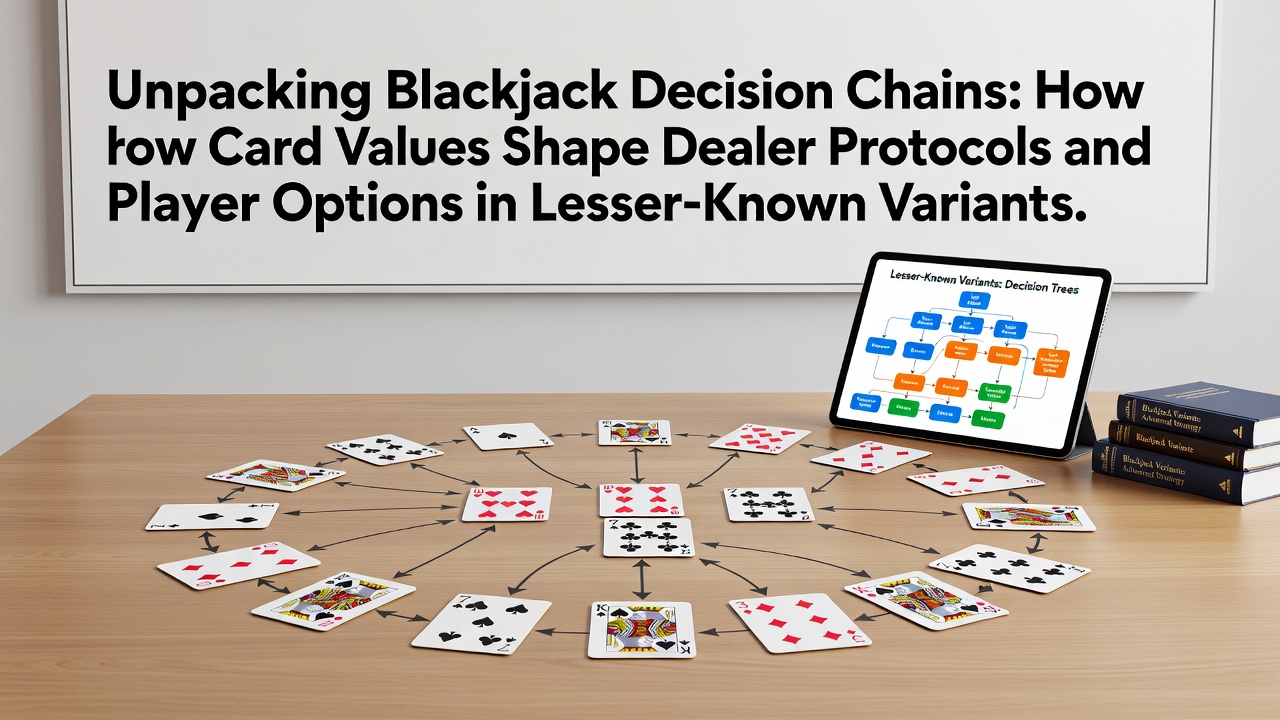
Decision Chains in Blackjack: Card Values Driving Protocols and Options in Niche Variants
Card values form the foundation of every choice in blackjack variants where standard rules give way to specialized mechanics, and researchers have mapped how an ace counting as one or eleven alters dealer protocols across multiple games. In Spanish 21, for instance, all cards retain their face values yet the absence of tens shifts dealer hit-or-stand thresholds on soft totals, prompting players to adjust splitting and doubling sequences accordingly. Observers note that these adjustments create extended decision chains where an initial two-card total determines subsequent options that would not exist under conventional multi-deck play.
Core Card Values and Their Role in Dealer Protocols
Standard numerical assignments remain consistent across variants, yet protocol changes modify outcomes once those values reach the dealer’s hand. A dealer showing an ace must check for blackjack in many formats, but in Double Exposure the dealer reveals both cards immediately so players see whether the ace pairs with a ten-value card before any action occurs. Data from regulatory filings indicate that such transparency reduces certain player options while expanding others tied directly to the visible totals. When the dealer’s upcard reaches seventeen or higher, standing becomes mandatory in most jurisdictions, although Australian reports document occasional “hit soft seventeen” rules that extend the chain into additional draws.
Player Options Shaped by Ace and Ten-Value Interactions
Aces introduce the greatest variability because they retain dual valuation until the final total is locked. In Blackjack Switch players receive two hands and may swap cards between them, which means an ace moved from one hand to another can convert a hard total into a soft one mid-round. Studies released by the Alcohol and Gaming Commission of Ontario show that this swap mechanic increases the frequency of soft totals reaching twenty-one after the exchange, thereby altering surrender and insurance availability in real time. Ten-value cards, meanwhile, anchor most doubling decisions, and variants that prohibit doubling on certain totals force players to recalculate risk when an ace sits in the hole.
Lesser-Known Variants and Their Distinct Decision Chains
Pontoon, popular in British and Australian markets, replaces the dealer’s hole card with a face-down card that remains hidden until all players finish, which lengthens the chain because players must commit to hitting or standing before knowing whether the dealer already holds twenty-one. Super Fun 21 permits doubling on any number of cards and allows surrender after doubling, creating branches where an ace drawn on the third card can reopen previously closed options. Figures from the Nevada Gaming Control Board for the period ending August 2026 reveal that tables offering these rules recorded higher average hands per hour, largely because the expanded choices kept more players in each round.
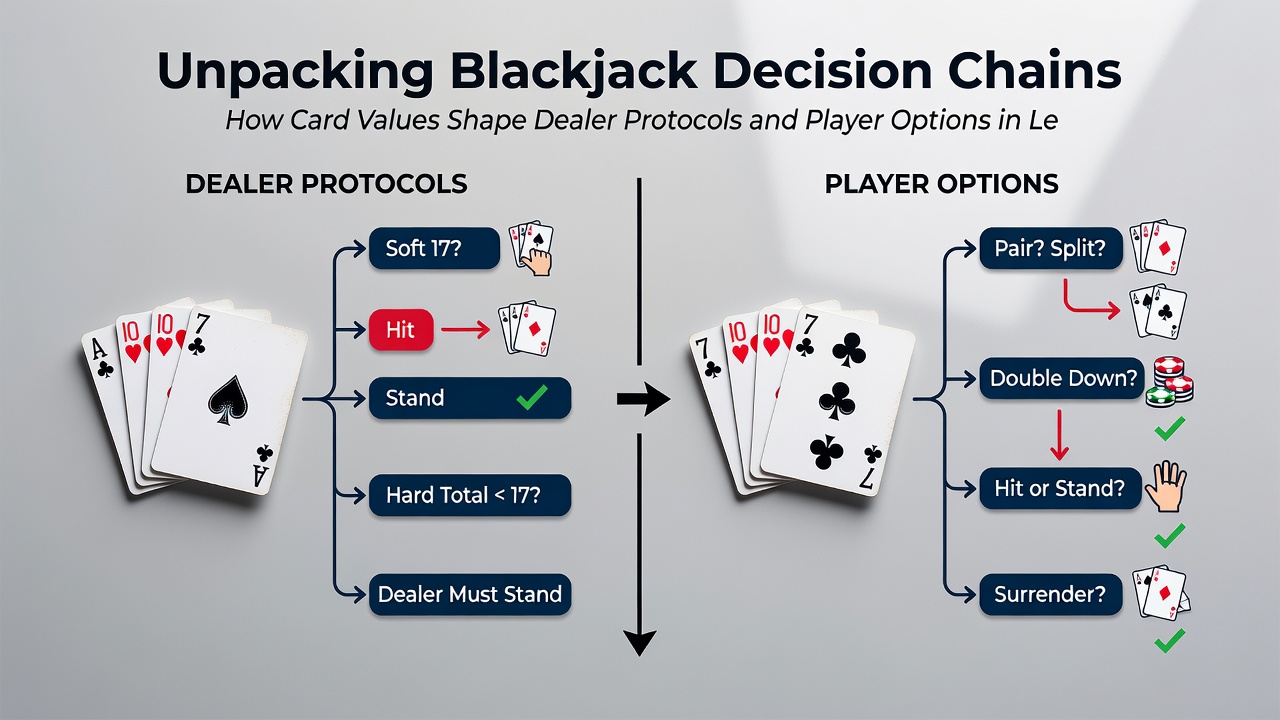
Another niche title, Face Up Blackjack, places both dealer cards face up from the start yet pays even money on blackjack, which compresses insurance decisions while extending doubling and splitting sequences when the dealer’s total sits between twelve and sixteen. Those who have tracked session data across multiple sites report that the visible dealer total changes the frequency of late surrender, particularly when an ace appears as the dealer’s second card.
Regulatory Context and Data Trends Through 2026
Government agencies in multiple regions have begun requiring operators to publish variant-specific strategy cards that reflect altered dealer protocols. Canadian provincial regulators, for example, mandate that any table advertising “no peek” rules must display the exact impact on player expected value when the dealer’s ace remains unchecked. European Union guidance issued in early 2026 similarly emphasizes clear disclosure of how ten-value cards affect doubling windows in games that allow doubling after splits. These disclosures have produced datasets that academic researchers now use to model decision trees exceeding twenty branches per initial hand.
Conclusion
Card values continue to dictate the length and complexity of decision chains once variant rules diverge from the standard template, and regulatory bodies along with industry data providers have documented measurable shifts in both dealer protocols and available player options. The patterns observed through August 2026 underscore that even small alterations to ace or ten-value handling generate cascading effects across entire rounds, shaping outcomes in games that remain outside the most commonly discussed formats.